The pharmaceutical industry is changing fast. Stricter regulations, new technology, and a move toward continuous manufacturing are forcing companies to rethink how they produce drugs.
Traditional batch production, where end-product testing determines quality, is being replaced by real-time process control. Process Analytical Technology (PAT) and chemical flow measurement are integral to this approach.
Together, these tools support better quality control and pharmaceutical consistency.
In this post:
Key Takeaways
PAT systems support continuous manufacturing, compliance, and drug quality in the pharmaceutical industry
Flow rate is a key variable in PAT frameworks that influences dosage accuracy, purity, solubility, and reaction efficiency
Conducting chemical flow measurement requires instruments designed to track raw materials moving through a PAT system
Integrating chemical flow measurement into PAT systems benefits pharmaceutical manufacturing operations and improves drug quality and accessibility
What is PAT in Pharmaceutical Manufacturing?
The US Food and Drug Administration (FDA) introduced PAT in 2004 to facilitate the shift from traditional end-product testing to a Quality by Design (QbD) model. Instead of testing a batch after completion, QbD builds quality into the production process.
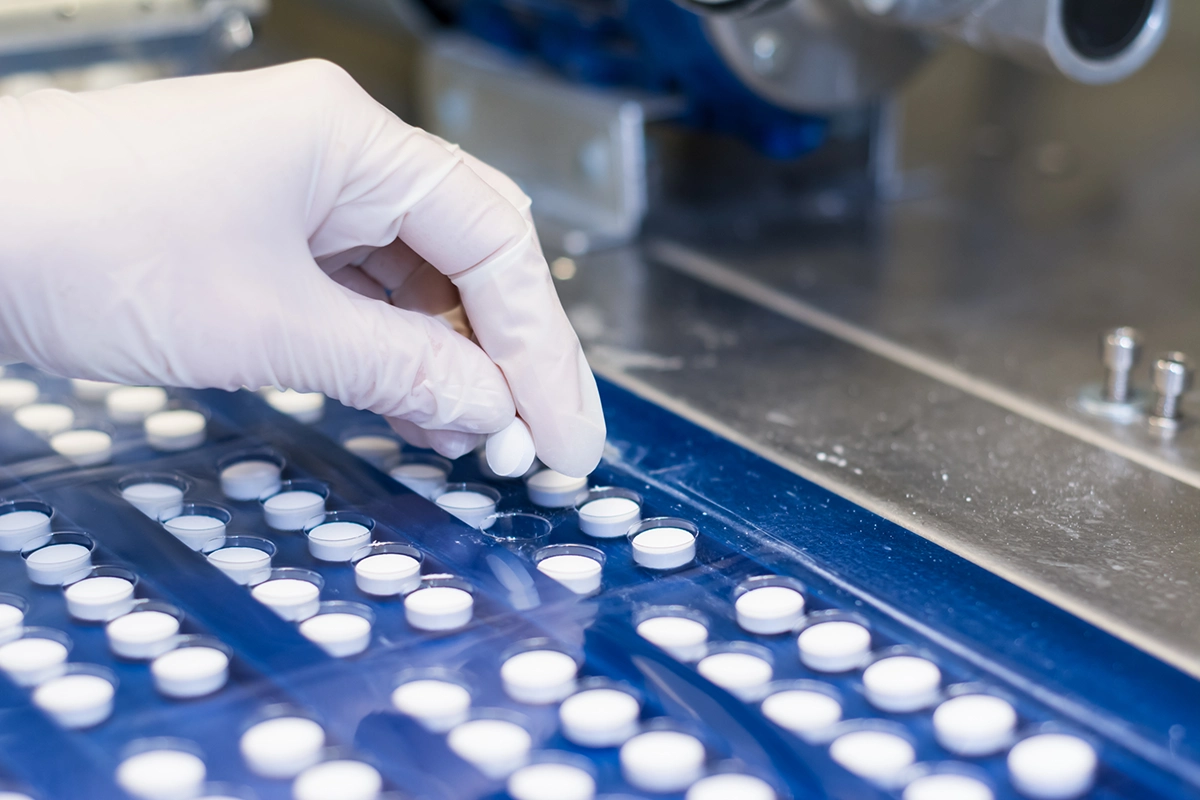
The PAT framework combines robust technology and instruments such as spectroscopy, sensors, data systems, statistical models, and automated controls. Pharmaceutical companies use these tools to control and analyse their manufacturing process in real time.
PAT systems do this by tracking two key variables:
- Critical Quality Attributes (CQAs) – Physical, chemical, or biological characteristics of a drug that must be controlled to ensure quality.
- Critical Process Parameters (CPPs) – Factors that influence CQAs, such as flow rate, temperature, pH, pressure, and mixing speed.
If the system detects an imbalance in a CQA, it makes proactive changes to CPPs.
For example, a spectroscopy probe monitors a drug’s composition in real time and calculates the Active Pharmaceutical Ingredient (API) concentration (a CQA). If the API fluctuates, the PAT system adjusts the mixing speed (a CPP) to correct the ratio.
How PAT Promotes Quality & Compliance
Regulatory guidelines are in place to ensure drug safety and efficacy. The FDA and the International Council for Harmonisation of Technical Requirements for Pharmaceuticals for Human Use (ICH) enforce guidelines by requiring compliant production processes and clinical trial data.
Compliance issues often result from inconsistent raw material feeds and equipment deviations. PAT systems catch these issues early, monitoring quality continuously and making real-time corrections before problems worsen.
PAT also serves as a compliance record. CQA and CPP analytics document drug quality at every production stage. This information comes in handy when proving compliance during facility inspections.
Flow Rate: A Critical Variable in PAT Systems
Drug manufacturing involves handling pharmaceutical chemicals in the form of liquids, gases, powders, and slurries. These raw materials are used to make everything from the cold and flu tablets you get at the grocery store to vaccines.

During the production process, raw materials flow through pipes, pumps, mixers, vacuums, and dies (steel casts that shape tablets). Flow rate refers to the volume, mass, and speed of materials moving through the system.
A Key Factor in High-Quality Pharmaceutical Manufacturing
Flow rate may seem like a minor operational function within an intricate production framework. However, it significantly influences how materials react, mix, and transform during manufacturing.
Flow rate directly impacts factors that contribute to a drug’s quality and consistency.
- Dosage accuracy – Flow plays an important role in obtaining proper dosages, especially during the production of tablets and capsules. Powders must flow into dies at a consistent rate to ensure dosage accuracy and weight uniformity.
- Solubility – The rate of solubility controls how quickly a drug dissolves and takes effect. Uneven flow can upset the balance, slowing absorption or reducing efficacy.
- Reaction efficiency – Controlled flow keeps reactants mixing evenly, which reduces impurities and improves heat transfer. Both are essential to a clean, efficient reaction.
- Purity – A drug’s purity refers to how much of the active ingredient is free of byproducts and unneeded chemicals. Proper flow promotes even chemical blending, controlled timing, and consistent heat distribution, all of which keep unwanted compounds out.
Real-time monitoring is the only sure-fire way to ensure flow rates remain consistent. This is where chemical flow measurement enters the process.
The Importance of Real-Time Chemical Flow Measurement
Consistent pharmaceutical manufacturing depends on proactive chemical flow measurement. This involves the use of innovative, highly accurate instruments to monitor the flow rate of liquids, gases, powders, and slurries.
Within a PAT framework, flow measurement gives pharmaceutical manufacturers visibility into each production step. When a deviation occurs, they can adjust conditions in real time before quality drops.
Flow measurement also identifies equipment degradation and shows how a manufacturing process behaves under varying conditions. This data supports predictive maintenance and process upgrades.
Flow Measurement Instruments Used in Pharma PAT Systems
Choosing the right instrument depends on the materials used, process requirements, and desired accuracy.

Here are some common flow measurement instruments used in PAT systems:
Coriolis Flow Meters
Known for their accuracy, Coriolis flow meters measure the volume, density, and temperature of liquids running through a PAT system. Inside the meter, small tubes vibrate as liquid moves through them. The liquid influences the vibration, and sensors translate that change to calculate flow conditions.
Coriolis flow meters provide continuous flow measurement and control, which contribute to a stable production process and drug consistency.
Ultrasonic Flow Meters
These instruments monitor the speed of purified water, viscous liquids, and gases as they move through pipes. Two sensors send ultrasonic signals with and against the flow to determine fluid velocity. This ensures the correct amount of material is moving through the system, which supports drug consistency and quality.
Ultrasonic flow meters don’t come into contact with raw materials. This makes them invaluable in situations where avoiding contamination is crucial.
Electromagnetic Flow Meters
Used for monitoring conductive liquids like biological buffers and API solutions, electromagnetic flow meters help ensure correct dosage and process control.
The meter creates a magnetic field in the system pipe. As liquid passes through the pipe, it generates an electric voltage. The faster the liquid is travelling, the stronger the voltage. Sensors detect the voltage to measure flow rate.
Thermal Mass Flow Meters
These meters use heat to measure the flow rate of gases. Small sensors gently heat the gas passing through a pipe. Gas carries some of the heat away as it passes the sensors. The meter then calculates the flow rate by detecting how much heat is lost.
Regulating gas flow helps maintain sterile conditions in drug production. These meters are widely used for coating tablets, ensuring proper dosing, and protecting sensitive ingredients from oxidation.
Loss-in-Weight (LIW) Feeders
LIW feeders ensure accurate API content in tablets by monitoring powder flow. The feeder tracks the weight of a hopper (a cone-shaped container) as it feeds powder into the system. If the flow rate is off, the system makes adjustments in real time.
Benefits of Integrating Chemical Flow Measurement Into PAT Systems
Chemical flow measurement isn’t optional in continuous manufacturing – it’s foundational. Integrating this critical step into PAT systems results in positive outcomes throughout the production process.
Operational benefits include:
- Product quality – Flow management reduces mixing variability, ensuring raw materials flow into the system in precise and consistent ratios. This is vital for maintaining the purity, dosage, and potency of drugs.
- Process control and understanding – By providing data that triggers real-time adjustments, flow measurement supports the automatic feedback loop in PAT systems. It also provides critical data that allows companies to better understand how each production step influences the final product.
- Waste reduction – The early detection of flow rate deviations prevents off-spec batches. This minimises waste and reduces costs associated with disposal and reworks.
- Scalability – Conducting chemical flow measurement during development helps companies scale their manufacturing operations. It pinpoints which flow rates should be used consistently as volume increases.
- Reduced downtime – Real-time flow measurement helps identify issues like equipment failure or flow restrictions. Early detection and proactive troubleshooting prevent production interruptions.
Beyond operational gains, chemical flow measurement helps pharmaceutical companies provide a reliable supply of safe, high-quality medications to the public.
Conclusion
From tighter regulatory control to the growing demand for specialised drugs, the pharmaceutical industry is under increasing pressure to optimise production. Chemical flow measurement integrated into PAT systems gives companies the real-time control to overcome these challenges.