Contamination is a chemist’s worst enemy, especially in industries like pharmaceuticals, biochemicals, and microelectronics. Even the tiniest airborne particle can ruin a batch or alter an essential chemical reaction. That’s precisely why chemical manufacturers rely on cleanrooms to protect their formulations.
Cleanrooms filter out pollutants like dust, microbes, and aerosol particles. This enables technicians to work with materials without fear of cross-contamination.
But cleanrooms aren’t a one-size-fits-all solution. Companies must consider different cleanroom standards when choosing the appropriate environment for their manufacturing needs.
Let’s take a closer look at how these ISO standards work.
Key Takeaways
Cleanroom standards support product safety and consistency while reducing the risk of raw material wastage
Classifications rank cleanrooms based on the concentration of airborne particles allowed inside the space
The ISO 14644-1 serves as the primary guide for the global classification of air cleanliness in cleanrooms
Although it was cancelled in 2001, the FED-STD-209 classification system aligns with ISO standards and is still used by many chemical manufacturers
In this post:
The Benefits of Cleanroom Standards
Governing bodies establish and enforce cleanroom standards to ensure safety and consistency across all types of chemical manufacturing. These standards dictate everything from air filtration rates to the protective clothing technicians must wear while working in cleanrooms.
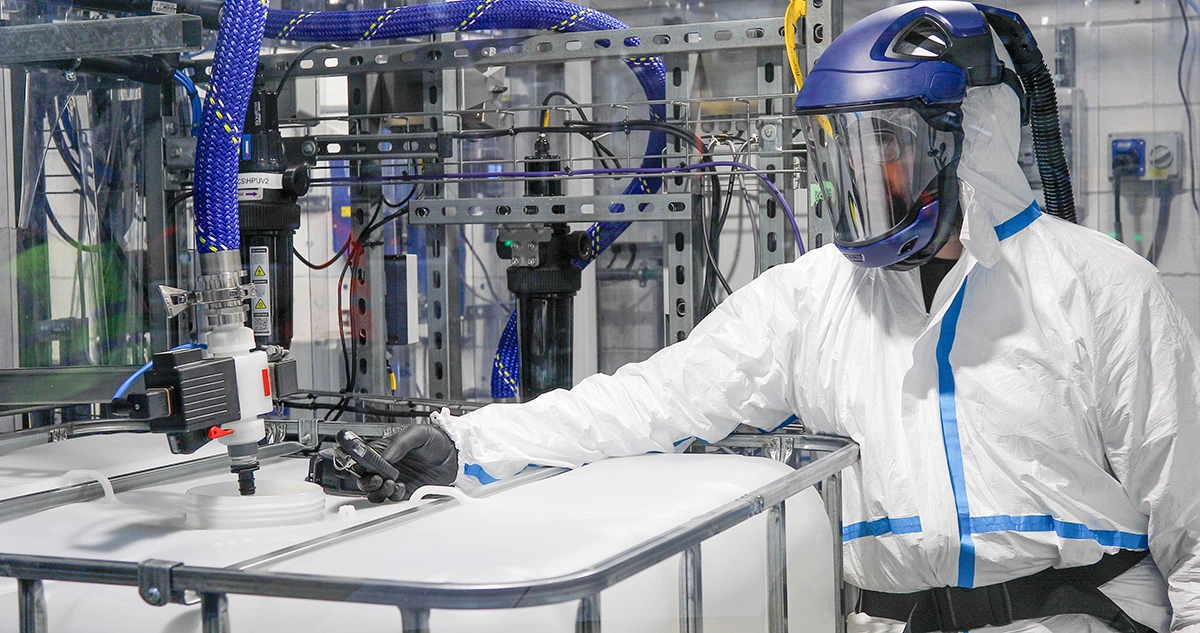
Cleanroom standards aren’t cumbersome rules that interrupt a manufacturing team’s workflow. In fact, they’re good for companies. They make it possible for brands to offer product guarantees across international markets.
Sterile cleanrooms also reduce the risk of costly manufacturing errors. For example, if a formulation gets contaminated, it results in failed quality control tests and wasted raw materials. Not to mention the time and effort put into the production process.
Other benefits of adhering to cleanroom standards include:
- Regulatory compliance – Cleanrooms prevent inspection failures that may lead to fines, legal liability, or operational shutdown.
- Employee safety – Air filtration and containment ensure technicians aren’t exposed to toxic substances.
- Industry reputation – Producing high-quality chemicals that adhere to cleanroom guidelines helps companies establish and maintain customer trust in their sector.
With cleanrooms in place and a clear understanding of the standards for using them, manufacturing facilities can become champions of quality and consistency.
ISO Cleanroom Standards
The International Organization for Standardization (ISO) sets the global standards for cleanroom environments. These standards provide a universal language for manufacturers around the world.
The ISO system evaluates the cleanliness of a room based on the number and size of particles found per cubic metre of air.
Manufacturers in the UK and across Europe use these metrics to align their facilities with international expectations. This alignment ensures that chemical products meet quality benchmarks before shipment and use.
The Different Cleanroom Classifications
Preventing chemical contamination requires an understanding of cleanroom classifications.
Classifications rank cleanrooms based on the concentration of airborne particles permitted inside the space. The lower the classification, the fewer unwanted particulates.
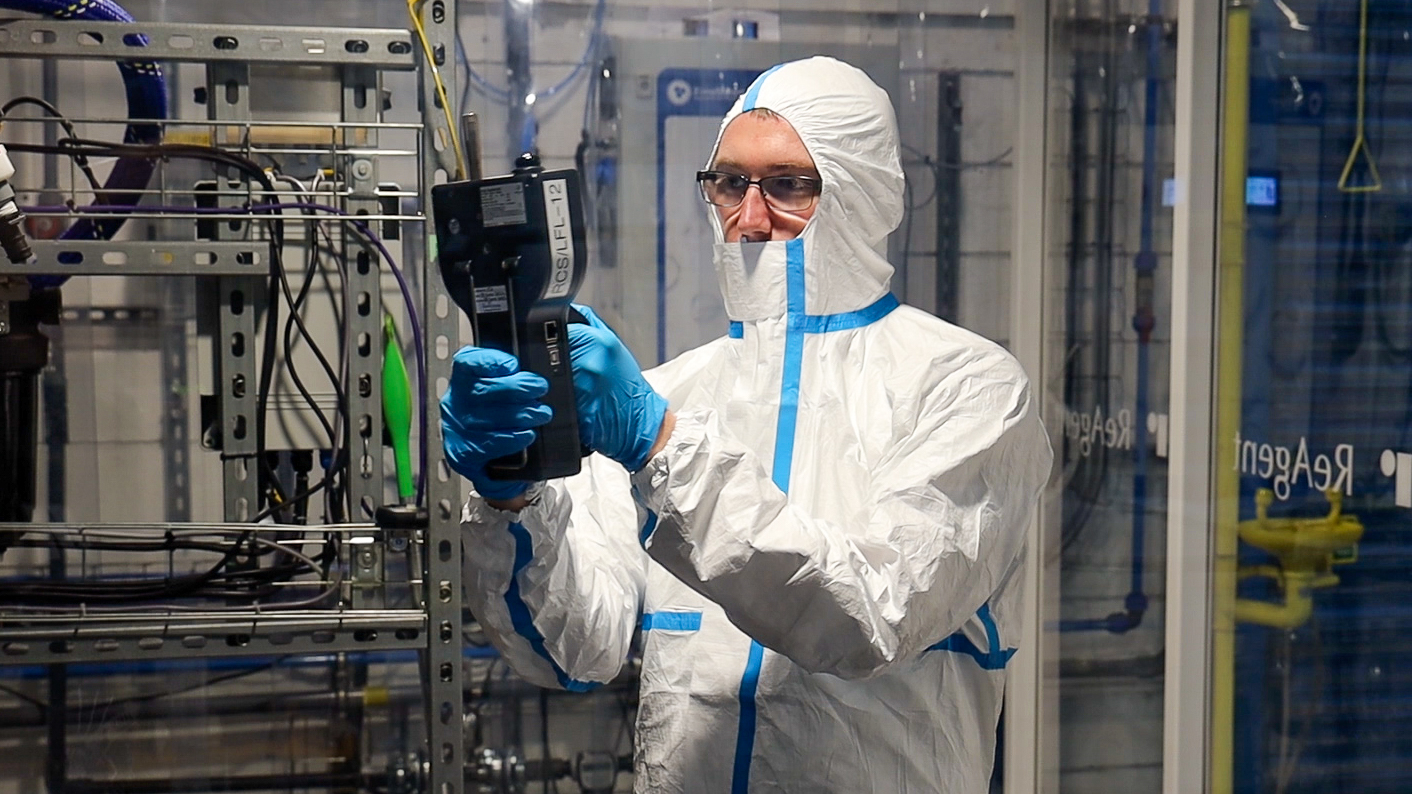
Chemical manufacturing plants select their preferred classifications based on the sensitivity of the substances they handle. Engineers assist with this determination by measuring particle sizes in micrometres to determine the correct ranking.
Sensitive chemical processes, like those used in the manufacturing of semiconductors or aerospace chemicals, require cleanrooms with almost no airborne debris. Less sensitive packaging processes might only require basic particle control.
The ISO 14644-1 Classification Standard
ISO 14644-1 is the primary guide for the global classification for air cleanliness.
The system monitors particle sizes ranging from 0.1 micrometres to 5.0 micrometres. Regular testing ensures chemical manufacturing facilities stay within their designated cleanroom standards over time.
ISO 14644-1 defines a scale from ISO 1 to ISO 9.
ISO 1 represents the cleanest possible environment. ISO 9 represents a space similar to the air in an ordinary room, such as an office. Most chemical manufacturers operate somewhere in the middle of this scale.
Here’s a breakdown of the most commonly used ISO cleanrooms:
ISO Class 5 Cleanroom
Class 5 cleanrooms are the most common choice for sterile chemical manufacturing. They feature vertical or horizontal laminar flow patterns, in which filtered air moves in parallel layers.
These cleanrooms protect chemicals during critical exposure points, such as open-air mixing and bottling. Technicians must wear full-body protective suits to avoid contamination and maintain compliance.
ISO Class 6 Cleanroom
Class 6 cleanrooms serve as reliable buffer zones and processing environments in advanced chemical facilities. They use non-unidirectional or zoned airflow.
These cleanrooms are ideal for intermediate manufacturing processes, such as handling high-end optical chemical coatings and specialised polymer synthesis. Technicians must wear sterile suits with full head coverings, gloves, and sealed booties.
ISO Class 7 Cleanroom
These are the go-to cleanrooms for fine chemical compounding and precision laboratory environments. Class 7 cleanrooms rely on high-volume, non-unidirectional airflow systems that cycle and refresh the air inside the room dozens of times per hour.
These cleanrooms safeguard liquid chemical formulations during standard compounding, sensitive bottle filling, and quality control testing. Technicians must wear dedicated cleanroom scrubs, hairnets, and shoe covers to maintain compliance.
ISO Class 8 Cleanroom
Class 8 cleanrooms are the standard for bulk chemical manufacturing and general contamination control. They use turbulent ventilation to filter out coarse ambient dust. This keeps the air cleaner than a standard industrial warehouse.
These cleanrooms are primarily used for heavy-duty tasks like raw material handling, bulk powder blending, and chemical packaging. Technicians wear baseline protective gear, such as standard lab coats, gloves, and head coverings (hairnets or caps).
FED-STD-209 Classification Standards
The US government created the FED-STD-209 system before the adoption of ISO guidelines. Although the US General Services Administration cancelled this standard in 2001, industry professionals still use its terminology.

FED-STD-209 classification aligns with the ISO standards discussed above. Let’s examine the specific classes defined by the old framework.
Class 100 Cleanroom
The Class 100 designation aligns with the modern ISO 5 classification.
Air flows in a unidirectional, laminar flow pattern in these cleanrooms. The constant downward air sweeps away potential contaminants before they make contact with open containers.
Class 1,000 Cleanroom
These cleanrooms align with ISO 6 standards.
The air inside Class 1,000 cleanrooms changes dozens of times every hour. These cleanrooms are used for speciality chemical blending and analytical laboratory testing.
Class 10,000 Cleanroom
A Class 10,000 cleanroom aligns with ISO 7 standards.
Facilities often use this standard for mixing chemicals that have moderate sensitivity to airborne debris. This setup provides protection without the high cost of higher-tier systems.
Class 100,000 Cleanroom
The Class 100,000 classification is equal to ISO 8 cleanroom standards.
Chemical manufacturers frequently use these rooms for bulk material storage, component washing, and product packaging. They prevent major debris from entering the primary manufacturing stream.
Conclusion
Maintaining product purity in chemical manufacturing facilities isn’t possible without cleanroom standards. They help companies build reliable quality control systems that reduce the risk of contaminated formulations and unnecessary material wastage. For any chemical manufacturer, it’s all about choosing the classification that protects their specific formulations and allows them to manage operational costs.