Many everyday products that we use are chemicals, from the baking soda in our kitchen cabinets and the detergents under our sinks, to drain cleaners, air fresheners and yes, your food additives as well. This can cause alarm for many people because the word ‘chemical’ has come to sound dangerous and toxic – but not all chemicals are harmful.
While many chemicals are beneficial, it’s important to understand when and why certain chemicals can pose risks to our health and environment. When certain chemicals interrupt, inhibit, redirect, or totally halt these normal biochemical reactions, they can be toxic, venomous, corrosive, flammable or carcinogenic.
The question then is, do all chemicals have this potential, and what should we be careful about when interacting with them in different settings?
In this post:
Key Takeaways
Many chemicals are safe and essential for life when used correctly
The harm a chemical can cause depends on dosage, exposure, reactions, and long-term effects
Safe handling, proper storage, and awareness of chemical properties reduce risks
Some chemicals become more dangerous when mixed or exposed to certain conditions
Long-term exposure to some chemicals can lead to chronic health and environmental issues
Are All Chemicals Harmful?
It’s a common misconception that all chemicals are dangerous. In reality, many chemicals are vital to our existence.
Life as we know it simply wouldn’t be possible without chemicals and chemical reactions. In fact, approximately 37×1012 (or 37 thousand billion billion) chemical reactions occur in the human body every second.
For instance, water (H₂O) is a chemical compound essential for life. Similarly, oxygen enables our cells to produce energy, and various vitamins and minerals support bodily functions.

However, the context in which a chemical is used plays a significant role in determining its safety. Even beneficial chemicals can become harmful under certain conditions. For example, while oxygen is necessary for survival, prolonged exposure to high concentrations can damage lung tissue.
As we encounter hundreds of thousands of chemicals every day, how can we figure out which chemicals might pose us harm?
Well, aside from good old common sense, it helps to be aware of the six categories that harmful chemicals are classified by:
- Highly fluorinated chemicals
Highly fluorinated chemicals are present in various products that are designed to be water-resistant and non-stick. Common products that contain these chemicals are non-stick cookware, carpeting, outdoor apparel, and food packaging. Examples of highly fluorinated chemicals include perfluoroalkyl chemicals (PFAS).
These chemicals are among the most persistent environmental pollutants across the globe and are linked to a wide range of chronic and acute diseases, such as kidney cancer, testicular cancer, elevated levels of cholesterol, and morbid obesity.
- Antimicrobials
Antimicrobials are chemicals designed to kill or inhibit the population growth of microbes on surfaces. Thus, they can kill harmful microbes, particularly pathogenic bacteria. This group of chemicals includes triclosan and triclocarban, which are common ingredients in many hygiene products like soap, deodorant, and toothpaste. They can also be found in brand new socks, lunch boxes, and kitchen countertops as protection against bacterial growth.
Unlike antibiotics, antimicrobials are not meant to be ingested. When ingested or absorbed through the skin, they can disrupt the normal functions of the endocrine, thyroid, and the reproductive systems. They may also cause the development of superbugs or strains that are highly resistant to antibiotics.
- Flame retardants
These chemicals are usually associated with problems with the endocrine glands and reproductive system. They can also negatively affect the immune system and the nervous system. In some cases, flame retardants have even been linked to cancer.
Some household items that typically contain flame retardants are furniture, baby product foam, electronic appliances or gadgets, and building insulation. While these chemicals are resistant to fire, they can also be very toxic. Flame retardant chemicals include phosphorus, bromine, chlorine, nitrogen, and even some metals.
- Bisphenols and phthalates
Bisphenols and phthalates are chemicals found in plastics, pesticides, and flame retardants. Bisphenol-A, more commonly known as BPA, is the most notorious chemical in this group. It’s also the most common, being used in the linings of bottles and soda cans, though its concentration here is too low to cause any adverse effects.
In general, though, bisphenols and phthalates are toxic when ingested or inhaled as vapours because they behave as endocrine disruptors. This means that they’re able to disrupt the normal hormone signalling mechanisms in the human body. Even at small concentrations, these chemicals can affect the reproductive and immune systems, causing developmental problems in the foetus. They can also affect the neurologic system, resulting in various neurological problems, such as tremors.
- Organic solvents
Organic solvents refers to hydrocarbons, ketones, and glycol ethers that are used as thinners for paint and coatings. They’re also used as degreasers and chemical cleaners. Some examples are:
- Turpentine
- Naphtha
- Toluene
- Methyl ethyl ketone (MEK)
- Dimethylformamide
- Ethylbenzene
- Xylene
- n-Butyl acetate
- Butanol
As solvents, these organic compounds can dissolve other polar organic compounds. Virtually all of these chemicals have noxious vapours which, when inhaled and absorbed into the lungs, can cause nausea and vomiting. Some of them also have carcinogenic properties, with research showing that short-term, high level exposures to these chemicals and long-term, low-level exposures are both associated with various types of cancers. They can also adversely affect the reproductive system.
- Heavy metals
Elemental metals like lead, zinc, aluminium, mercury, and cadmium are found in trace amounts in the environment. They’re also commonly found in some of the products that we use in everyday life, like batteries and thermometers.
If chronically ingested, these metals can accumulate in the cells and cause organ damage. They can also damage the central nervous system, lungs, kidneys, and liver. Another harmful side effect of heavy metals is abnormal blood clotting: one study indicates that mercury can cause abnormal blood coagulation and thrombin generation.

How Chemicals Can Become Harmful
Chemicals can be harmful under certain conditions, depending on a range of factors.
While some substances are naturally toxic, others only become dangerous when used incorrectly, in excessive amounts, or in combination with other compounds. The way a chemical interacts with the human body, the environment, or other materials determines its level of risk.
With that in mind, here are three key areas that impact the potential harm factor of chemicals.
1. Dosage and Exposure
The adage “the dose makes the poison” holds true for many substances. A substance that is harmless or even beneficial in small amounts can become toxic at higher concentrations. For instance, while iron is essential for blood production, excessive iron intake can lead to organ damage.
Exposure routes also play a critical role. Chemicals can enter your body through ingestion, skin contact, or inhalation. The severity of the effect often depends on the exposure route. Inhaling fumes from certain solvents can cause respiratory issues, while skin contact might result in irritation or burns.
Duration and frequency of exposure are additional considerations. An acute exposure, which happens with short-term contact with a chemical leading to immediate health effects. Chronic exposure, meanwhile, involves repeated or continuous contact over a longer period of time, which could result in long-term health issues.
2. Chemical Reactions
Chemicals can undergo reactions that transform them from benign substances into more harmful ones.
For example, mixing household bleach with ammonia-based cleaners produces chloramine vapours, which can irritate the respiratory system. Such unintended reactions can occur during storage, handling, or disposal of chemicals.
Environmental factors like temperature and light can also influence chemical stability. Some chemicals may decompose or react when exposed to heat or sunlight, leading to the formation of hazardous by-products.
Proper storage conditions are essential to prevent this, as certain chemicals can react with materials they come into contact with, leading to corrosion or the release of toxic gases.

3. Long-Term Effects
Some chemicals may not cause immediate harm, but can have detrimental effects over time. Prolonged exposure to low levels of certain substances can lead to chronic health conditions. For instance, asbestos fibres can cause lung diseases when inhaled, and are infamous for causing cancer.
Persistent chemicals in the environment, such as per- and polyfluoroalkyl substances (PFAS), can accumulate in living organisms. These “forever chemicals” have been linked to various health issues, including immune system suppression and increased risk of certain cancers.
It’s also important to consider the potential for bioaccumulation, where chemicals build up in an organism over time, leading to higher internal concentrations than those found in the environment. This can have major impacts through the food chain, impacting entire ecosystems.
How To Handle Chemicals Safely
Ensuring safety when handling chemical solutions involves understanding their properties and adhering to recommended guidelines. While we may not be in a lab setting every day when reaching for the bleach to clean our homes, some of these protocols are still good to keep in mind.
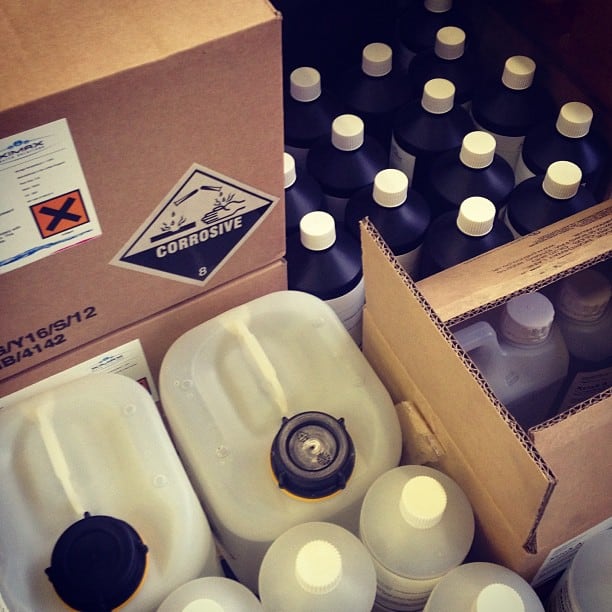
For instance, proper storage is crucial. Chemicals, especially more dangerous ones such as heavy cleaners, should be kept in appropriate containers, away from incompatible substances, and under suitable environmental conditions.
Personal protective equipment (PPE), such as gloves, provides a barrier against potential exposure. It’s essential to select PPE that is compatible with the specific chemicals being handled to ensure adequate protection.
Clear labelling of chemical containers with pertinent information, including hazard warnings and handling instructions, aids in preventing misuse. Regular training on chemical safety protocols ensures that individuals are equipped with the knowledge to handle substances responsibly.
What Are Harmful Chemical Reactions?
There are several types of hazardous chemical reactions that are considered harmful because they can disrupt or destroy normal biological functions, or cause ecological imbalances and environmental destruction.
For example, combining bleach with acidic cleaners can release chlorine gas, a toxic substance that can be devastating health-wise. Similarly, mixing hydrogen peroxide with vinegar results in peracetic acid, which comes with a risk of respiratory irritation.
Here are some more examples of harmful chemical reactions:
- Corrosive reactions from acids and alkalis
- Explosive reactions or sudden combustions, such as LPG explosions
- Oxidising reactions, such as ozone reactions with organic tissues
- Bleach reactions, which can harm the skin
Toxic gas generation from other chemical reactions, such as organic decomposition
Are All Chemicals Harmful To Humans?
Obviously, not all chemicals or chemical reactions are harmful to humans. While there are several household chemicals that are harmful when ingested, inhaled or when they come into contact with the skin, these risks are usually very easy to safeguard against with a little common sense and awareness.
Many chemicals, like the food we eat, the water we drink and the medicines or vitamins we take, are absolutely necessary to our survival. Similarly, there are some chemicals that have the potential to be harmful but are also important to everyday life, like antifreeze, hydrogen peroxide, and pesticides.
When we navigate around so many chemicals day-to-day, it becomes almost impossible to completely limit your exposure to harmful chemicals. The best thing you can do to protect yourself is to always read the safety labels on whatever product you’re using, as well as the guidelines on storage and directions of use.
Conclusion
Chemicals are an unavoidable part of life, but with the right precautions, they do not have to be a threat. A mindful approach ensures that their benefits outweigh any potential harm, protecting both human health and the environment. Understanding when and why chemicals can be harmful is key to using them safely.