The Science Blog

Science and chemical manufacturing resources

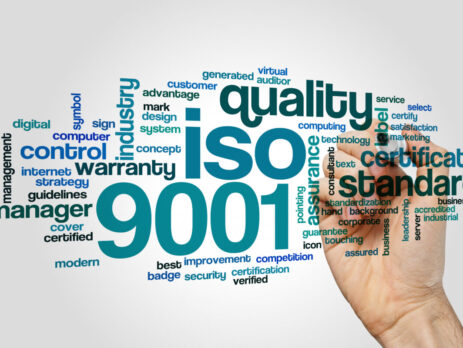
What Are The 7 Principles Of ISO 9001?

The seven principles of ISO 9001 are the foundation of establishing a quality management system (QMS) for your organisation. Created by ISO’s committee of experts, the key principles are:People engagement Customer focus Leadership Process approach Improvement Evidence-based decision making Relationship managementThese seven principles are designed to help you manage your organisation to a consistently high standard in line...
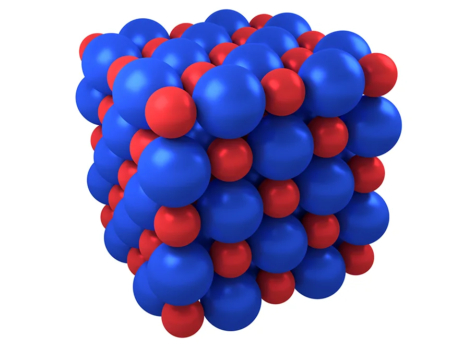
What Is An Ionic Bond?

An ionic bond is a type of chemical bond that’s formed when electrons are transferred from one atom to another. This means one atom becomes positively charged while the other is negatively charged, creating an electrostatic attraction between the anions and cations.Continue reading to learn more about how ionic bonds form, their characteristics, and some common examples. We’ll also...

What Are Ketones in Chemistry?

Ketones are a class of organic compounds identifiable by their carbonyl group, i.e. the group that has a carbon-oxygen double bond.  A by-product of metabolism, ketones are naturally present in humans, plants and animals. They’re also used as solvents in a wide range of industries.  Continue reading to learn more about ketones, the different types, and some common applications. What are ketones? Ketones...

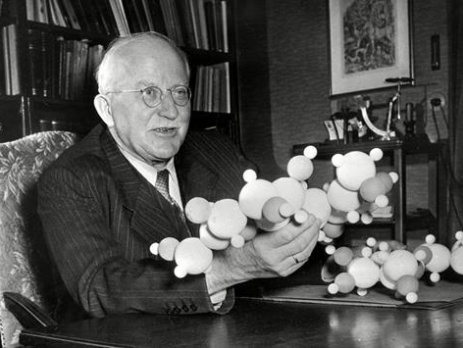
Who Invented Polymers In Chemistry?

Various scientists, engineers, and inventors can be credited with the discovery of natural polymers and the invention of synthetic polymers. However, Hermann Staudinger was the first person to suggest polymers are composed of long chain molecules with repeating subunits held together by covalent bonds.Polymers are chains of molecules that have repeating subunits known as monomers. Naturally occurring polymers serve as...

Types of Salts in Chemistry and Their Uses

Salts are ionic compounds resulting from a neutralisation reaction between an acid and a base. Depending on the respective strengths of the reactants, the types of salts in chemistry can be classified as acidic, basic, normal (neutral), or double.A basic salt is formed by the reaction between a strong base and a weak acid. Conversely, acidic salts are produced...

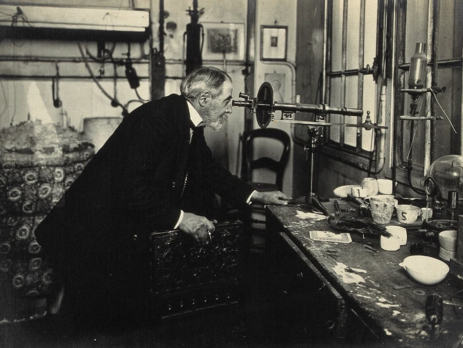
Who Discovered Stereochemistry?

Several scientists can be credited with the discovery and development of stereochemistry. They include Louis Pasteur, Jacobus H. van 't Hoff, and Joseph Le Bel. Stereochemistry is a branch of chemistry that focuses on the relative spatial arrangement of atoms in molecules and their manipulation. Continue reading to learn more about the origins of stereochemistry and its impact on modern chemistry. The...

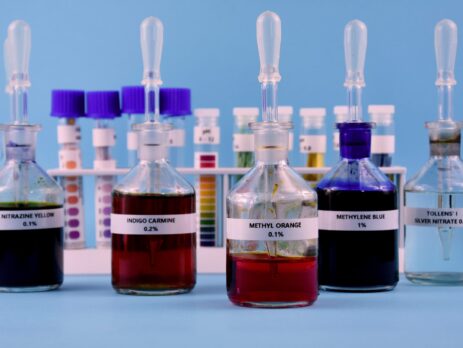
The Definition of Qualitative Analysis in Chemistry

Qualitative analysis in chemistry primarily focuses on the visual characteristics of a chemical reaction, for example, a change in colour or the production of bubbles. Unlike quantitative analysis, qualitative analysis does not involve measurements or numerical values and calculations. Qualitative analysis is relatively easy to perform because it generally doesn’t require expensive, high-tech equipment or precise measurements.  What is qualitative analysis? Qualitative...

Who Invented The pH Scale In Chemistry?

Danish chemist Søren Peter Lauritz Sørensen invented the pH scale in 1909. He developed the concept as a way of measuring acidity while working at the Carlsberg research lab in Copenhagen. Even today, the pH scale is an essential diagnostic tool that’s used to determine the degrees of acidity and alkalinity of a wide range of substances.Continue reading to...

About The Science Blog

At The Science Blog, we write about the latest from the world of science, chemistry, and chemical manufacturing. From the chemical methods of food preservation, soap making and why Mentos react with cola to the different types of salt in chemistry and the chemistry of fire, you’ll find all the resources you need to sate (and pique!) your curiosity about science.

If you’re interested in a career in science or chemistry, you can also use The Science Blog to find all the information you need on chemical careers. Whether you want to learn how you can pursue your dream job, or simply want to know what skills you need to pursue a STEM career, The Science Blog empowers you with the knowledge you need to begin your journey.

If you’re part of the chemical manufacturing industry, or want to learn more about it, The Science Blog also features a range of articles that focus on exactly that. Maybe you want to know how you can make your chemical manufacturing facility more eco-friendly, learn how titration is used in the pharmaceutical industry, explore the latest version of the ISO 9001 Standard, understand chemical reagents or uncover the benefits of cleanroom contract packing.

And for all of you chemistry buffs out there, The Science Blog lets you delve deeper into complex topics like the pH scale, aldehydes, ketones, HEPES buffer, and diagnostic reagents. Discussing the molecular structures and uses of different chemicals, we help you better understand the inner workings of common substances used in science. No matter what aspect of chemistry you’re interested in, The Science Blog has it all!

Explore our interactive periodic table

interactive periodic table on laptop screen

Explore our interactive periodic table

Jane Fletcher

Google
5/5

Always have excellent service from yourselves from ordering product to delivery.

Kevin Wallcroft

Google
5/5

A particularly easy to deal with chemical company. I telephoned, got all the advice needed with excellent friendly service. My chemicals arrived the very next day. Very happy!

Joanne King

Google
5/5

Fast efficient service, was kept updated on order throughout. Can not fault ReAgent sales and delivery processes.

Hebe Arat

Google
5/5

Their customer services were very helpful, sending us all the lab reports we needed, before we even bought from them. Then, once we ordered the product came very quickly.

Kerry L Customer Service

“All enquiries are treated as confidential – we never share your details”
Kerry
Customer Service

Darren W Technical Director

“Our manufacturing facility is accredited to ISO 9001, ISO 13485, ISO 14001 and ISO 45001”
Darren
Technical Director

ReAgent team headshot - sales team

“We provide comprehensive technical support with every enquiry”
Jo
Account Director

Shahryar Nafici
Read More
This is around 10 years that I am ReAgent chemical user, very good quality and also very on time delivery.
Kevin Wallcroft
Read More
A particularly easy to deal with chemical company. I telephoned, got all the advice needed with excellent friendly service. My chemicals arrived the very next day. Very happy !
Joanne King
Read More
Fast efficient service, was kept updated on order throughout. Can not fault ReAgent sales and delivery processes
Hebe Arat
Read More
Their customer services were very helpful, sending us all the lab reports we needed, before we even bought from them. Then, once we ordered the product came very quickly ( the next day!)