The Science Blog

Science and chemical manufacturing resources

Who Invented The Concept Of Valence In Chemistry?

In chemistry, valence (also known as valency) is used to measure how powerful an element is in combining molecules or chemical compounds. The concept was proposed in 1852 by Sir Edward Frankland, who sought to explain why atoms and molecules combine in certain ways. It was later discovered that the valency of an element is directly related to the positions...


How to Become a Forensic Scientist

When you were a child, you may have dreamt of becoming a scientist or a police detective. Well, you can actually become both if you pursue a career in forensics. Becoming a forensic scientist allows you to help in solving crimes by using scientific methodologies and laboratory techniques.A forensic scientist examines physical evidence and clues that can reconstruct the...

What Is Toll Manufacturing?

Many of us are familiar with the term ‘contract manufacturing’, but fewer people seem to have heard about toll manufacturing. But exactly what is toll manufacturing and what are the benefits for companies that choose this option? Toll manufacturing is a type of contract manufacturing arrangement in which a client company pays a fee to access a subcontractor's facilities and...

How To Become A Cosmetic Chemist

Wondering how to become a cosmetic chemist? You’ll need a degree in chemistry and to go on and work for a cosmetics company. To succeed on this career path requires excellent skills in both organic chemistry and biochemistry, as well as a good foundation in inorganic chemistry. Continue reading to discover what a cosmetic chemist does, and the steps...

Who Invented Titration In Chemistry?

Titration is one of the most common types of quantitative analysis performed in chemistry. While several individuals contributed to its development, titration as a method and complete setup is largely credited to the French chemist François Antoine Henri Descroizilles. He created the first burette in 1791 and was the first known chemist to assemble a titration apparatus, although not in...

The Role of Glucose in Energy Production

Glucose is one of the simplest sugars or monosaccharides that serves as the building block of all carbohydrates.  It’s also the primary source of energy for every known biological organism. Glucose is typically derived from carbohydrate- and sugar-rich food products such as wheat, rice and cakes.  Continue reading to learn more about glucose, how it’s made, and its function in the...

Who Created Penicillin?

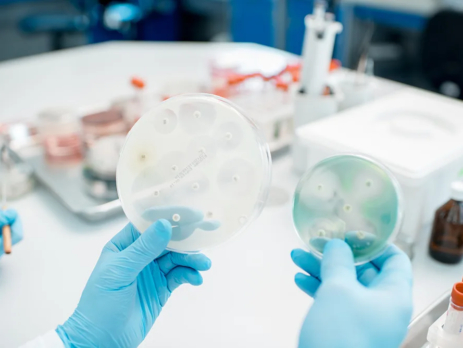
Penicillin was accidentally discovered by Alexander Fleming in 1928 while he was investigating the bacteria Staphylococcus. He observed that the presence of mould could kill or prevent the bacteria from reproducing any further. The fortunate breakthrough was a historical turning point in medicine, paving the way for the widespread use of modern antibiotics. In this article, we'll explore the origins...

The Science Behind Disinfectants: How And Why They Work

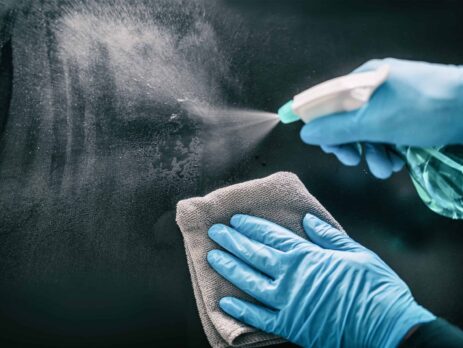
Disinfectants kill bacteria and viruses by destroying the cell membrane or protein envelope that surrounds each microbe. Exactly how they do this depends on the specific type of disinfectant that’s applied. Although disinfectants like alcohols, chlorine-based solutions and bleach are chemically different, the way they work is fundamentally the same. Continue reading to learn more about how and why disinfectants...

About The Science Blog

At The Science Blog, we write about the latest from the world of science, chemistry, and chemical manufacturing. From the chemical methods of food preservation, soap making and why Mentos react with cola to the different types of salt in chemistry and the chemistry of fire, you’ll find all the resources you need to sate (and pique!) your curiosity about science.

If you’re interested in a career in science or chemistry, you can also use The Science Blog to find all the information you need on chemical careers. Whether you want to learn how you can pursue your dream job, or simply want to know what skills you need to pursue a STEM career, The Science Blog empowers you with the knowledge you need to begin your journey.

If you’re part of the chemical manufacturing industry, or want to learn more about it, The Science Blog also features a range of articles that focus on exactly that. Maybe you want to know how you can make your chemical manufacturing facility more eco-friendly, learn how titration is used in the pharmaceutical industry, explore the latest version of the ISO 9001 Standard, understand chemical reagents or uncover the benefits of cleanroom contract packing.

And for all of you chemistry buffs out there, The Science Blog lets you delve deeper into complex topics like the pH scale, aldehydes, ketones, HEPES buffer, and diagnostic reagents. Discussing the molecular structures and uses of different chemicals, we help you better understand the inner workings of common substances used in science. No matter what aspect of chemistry you’re interested in, The Science Blog has it all!

Explore our interactive periodic table

interactive periodic table on laptop screen

Explore our interactive periodic table

Jane Fletcher

Google
5/5

Always have excellent service from yourselves from ordering product to delivery.

Kevin Wallcroft

Google
5/5

A particularly easy to deal with chemical company. I telephoned, got all the advice needed with excellent friendly service. My chemicals arrived the very next day. Very happy!

Joanne King

Google
5/5

Fast efficient service, was kept updated on order throughout. Can not fault ReAgent sales and delivery processes.

Hebe Arat

Google
5/5

Their customer services were very helpful, sending us all the lab reports we needed, before we even bought from them. Then, once we ordered the product came very quickly.

Kerry L Customer Service

“All enquiries are treated as confidential – we never share your details”
Kerry
Customer Service

Darren W Technical Director

“Our manufacturing facility is accredited to ISO 9001, ISO 13485, ISO 14001 and ISO 45001”
Darren
Technical Director

ReAgent team headshot - sales team

“We provide comprehensive technical support with every enquiry”
Jo
Account Director

Shahryar Nafici
Read More
This is around 10 years that I am ReAgent chemical user, very good quality and also very on time delivery.
Kevin Wallcroft
Read More
A particularly easy to deal with chemical company. I telephoned, got all the advice needed with excellent friendly service. My chemicals arrived the very next day. Very happy !
Joanne King
Read More
Fast efficient service, was kept updated on order throughout. Can not fault ReAgent sales and delivery processes
Hebe Arat
Read More
Their customer services were very helpful, sending us all the lab reports we needed, before we even bought from them. Then, once we ordered the product came very quickly ( the next day!)