
Although tap water in the UK is safe to drink, it does contain various chemicals. Certain chemicals, such as chlorine, are added during the treatment process to kill bacteria, while others may be present due to contamination.
Tap water is either supplied from a centralised source like a reservoir, or from multiple sources. Before being distributed to our homes, it undergoes vigorous treatment to kill potentially harmful microorganisms such as salmonella, amoeba, and E.coli. Water treatment involves various chemical and physical processes including filtration, flocculation, and chlorination.
In this post, you’ll learn more about the different types of chemicals that might be present in your tap water – and why they’re there.
In this post:
Why are chemicals added to tap water?
Generally speaking, chemicals are intentionally added to tap water for safety reasons. Chlorine compounds such as chloramine and chlorine dioxide, for example, are used to disinfect water so it’s fit for human consumption. In some cases, fluoride is also added to tap water because it has important health benefits. 
Depending on the area, tap water is pumped from various sources such as aquifers, dams or reservoirs, rivers, lakes, and rainwater collectors. In most cases, the water source provides fresh water. However, in arid regions like the Middle East, tap water may also be sourced from the sea. To be rendered safe to drink, seawater must undergo desalination – an additional process that usually requires more energy than freshwater treatments.
Treating water for distribution involves the following five steps (some of which also include adding chemicals):
- Coagulation
- Flocculation
- Sedimentation
- Filtration
- Disinfection

Step 1: Coagulation
This is typically the first step in the water treatment process. Before or during this step, the water is aerated to encourage chemical reactions with dissolved oxygen. Large particles like mud fragments are coagulated or packed together to form solid precipitates that can be easily removed. Chemicals are added to the water to attract and neutralise the negatively-charged particles. Some of the chemicals that are added as coagulants include:
- Aluminium sulphate or alum Al2(SO4)3
- Ferric chloride FeCl3
- Ferric sulphate Fe(SO4)3.
Step 2: Flocculation
Flocculation is similar to coagulation but it involves the gentle mixing or agitation of water to further form larger coagulated particles called flocs. These particles are later separated from the water.
Step 3: Sedimentation
During this stage, the solid particles from the first two steps are separated from the water. The flocs settle at the bottom and the water is then pumped out.
Step 4: Filtration
Water is pumped through layers of filters of varying pore sizes to remove finer particles like sand and dissolved organic matter. Activated carbon (otherwise known as activated charcoal) is also used to remove the bad odour. In addition, some water treatment plants use a process called reverse osmosis to further remove any dissolved solid particles. 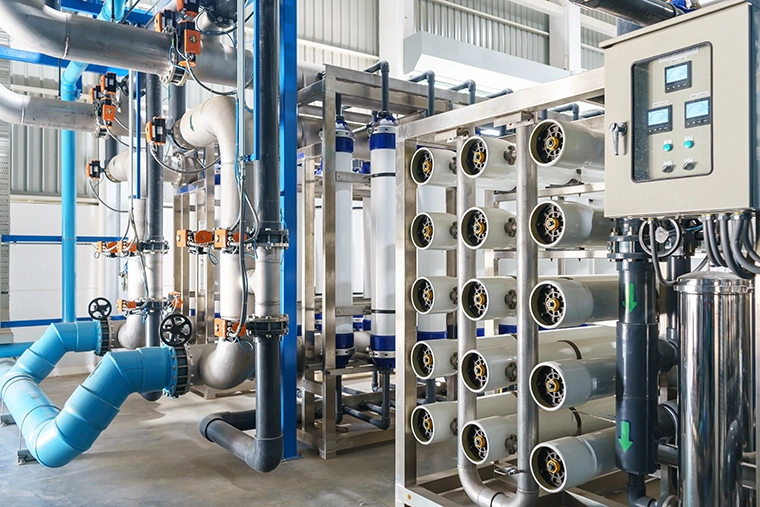
Step 5: Disinfection
During this stage, disinfectant chemicals such as chlorine, chloramine, or chlorine dioxide are added to the water to kill microorganisms, bacteria, and viruses. The water may also be subjected to ultraviolet rays to further kill any remaining pathogens. Trace amounts of the disinfectants remain in the water after it’s pumped out of the disinfection tanks. This is to ensure that the pipes through which the water flows are also disinfected.
What chemicals are in tap water in the UK?
UK tap water is among the safest and cleanest in the world, with a quality rating of 99.96% according to Discover Water. Nonetheless, it does contain various chemicals and contaminants that have been added either intentionally or accidentally. Some of the most common are chlorine, limescale, lead, and fluoride.
1. Chlorine
Chlorine compounds like chloramine and chlorine dioxide are added during the treatment process to disinfect the water and kill any microscopic pathogens. However, some trace amounts of chlorine may still be present in the tap water in your home or workplace.
2. Limescale
Limescale deposits are hard, chalky materials that are primarily composed of calcium carbonate or CaCO3. They can accumulate inside water pipes over time, especially in areas that have hard water. Hard water is water that contains dissolved minerals.
3. Lead
Lead is an unintentional contamination in tap water that originates from very old pipework. Although lead pipes were banned in the 1970s, they still exist in some properties and plumbing systems. If tap water flows through lead pipes, very small quantities of lead can dissolve into the water and contaminate it.
4. Fluoride
Fluoride is an element that’s found in mineral or compound form and is dissolved in water. Tap water naturally contains fluoride from the source. However, in some areas of the UK fluoride is added intentionally because it can help to strengthen tooth enamel and prevent decay.
What chemicals are in bottled water?
Bottled water products are usually marketed either as mineral water or purified drinking water. The latter is supposedly free from contaminants. However, this is not always the case, especially when it comes to products that are packaged in plastic bottles. Like tap water, bottled water also contains traces of some chemicals that can be picked up through the chemical bottling process. 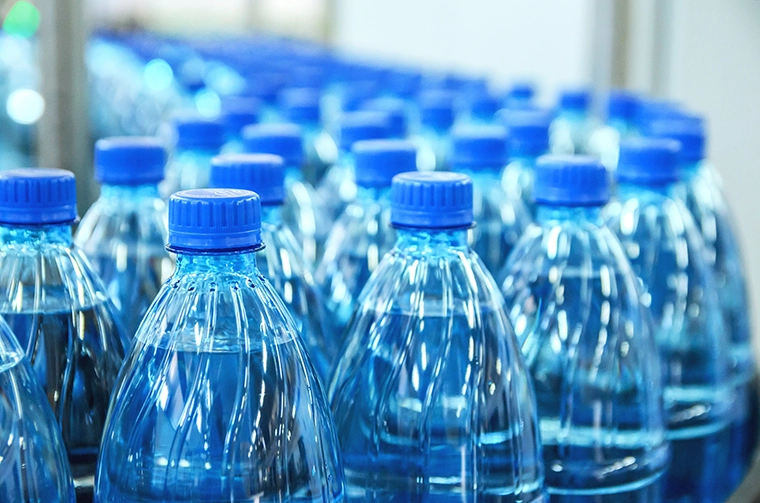
1. Copper
Commercial purified or mineral drinking water products don’t typically contain copper. However, trace amounts of copper can occasionally be present due to accidental contamination or as a result of using copper flasks and mugs.
It’s thought copper drinkware may have some benefits as copper ions can help to destroy bacteria and viruses. That being said, copper also has a toxicity level of 140 mcg/dL in the blood. But don’t worry, it’s highly unlikely you’ll reach this threshold even if you are a fan of copper mugs.
2. Fluoride
Fluoride is found in compound forms and occurs naturally in all sources of freshwater. It has some beneficial properties, particularly for teeth, as it can help to strengthen the enamel and prevent decay. Trace amounts of fluoride may be present in bottled water, especially if the water has come directly from the tap.
3. 1,2- Dichloroethane
While 1,2-Dichloroethane occurs naturally, it’s also a byproduct of the production of polyvinyl chloride, which is a type of plastic. Trace amounts can sometimes be found in bottled water, either as a result of contamination from the environment or from the processing itself.
4. Magnesium sulphate
Magnesium sulphate is typically found in hard water along with carbonates. It’s a naturally-occurring contaminant of bottled water but is not harmful in small amounts. However, it can have a laxative effect at concentrations above 250 mg/l. 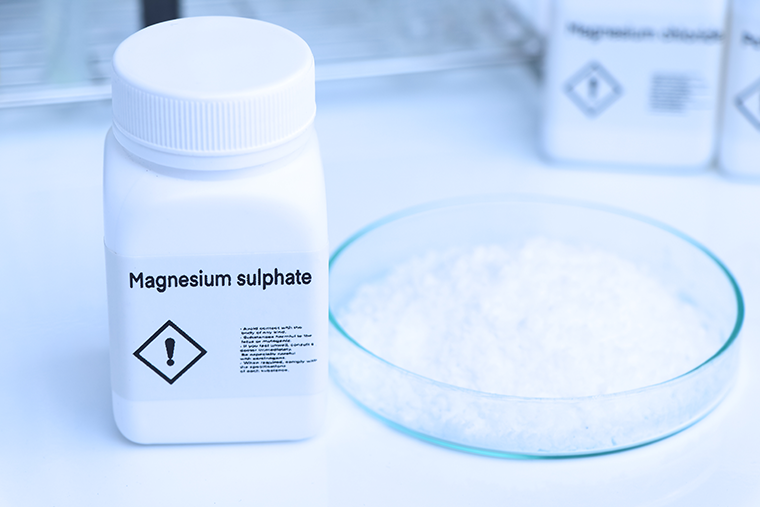
5. Potassium bicarbonate or potassium chloride
Potassium bicarbonate or potassium chloride is intentionally added to bottled water as minerals. They act as electrolytes for our body and play an especially important role during strenuous activities. Potassium bicarbonate and potassium chloride are also added to bottled water to improve the taste.
What causes the chemical taste in water?
Normal drinking water contains various dissolved substances, including air and minerals. These substances contribute to the natural taste of water and make it safe to drink. Ultrapure water, however, is unsafe to drink because it absorbs minerals from our body’s cells, potentially leading to dehydration.
The taste of tap water can sometimes be attributed to excessive chlorination and the presence of excess minerals.
Can chemicals in water make you sick?
The chemicals in tap water, especially the naturally-occurring minerals, won’t make you sick. In fact, some chemicals like chlorine are added in trace amounts to kill potentially harmful microorganisms and prevent you from getting ill. On the other hand, toxic contamination can make you unwell if the chemicals reach unsafe levels – this would be highly unusual in the UK.
Can you remove chemicals from water?
There are several ways to remove unwanted chemicals from water, including reverse osmosis, multiple filtrations like demineralisation and distillation, and flocculation. These are some of the vital steps that form part of the water purification process.
Summary
Some of the chemicals found in tap water occur naturally, while others are added intentionally to kill bacteria and make the water healthier. These chemicals, including the toxic ones, are not harmful in trace amounts. Some of the common chemicals found in tap water include chlorine, minerals, and fluoride. Tap water can become contaminated for many reasons, such as if it flows through old-fashioned lead pipes.